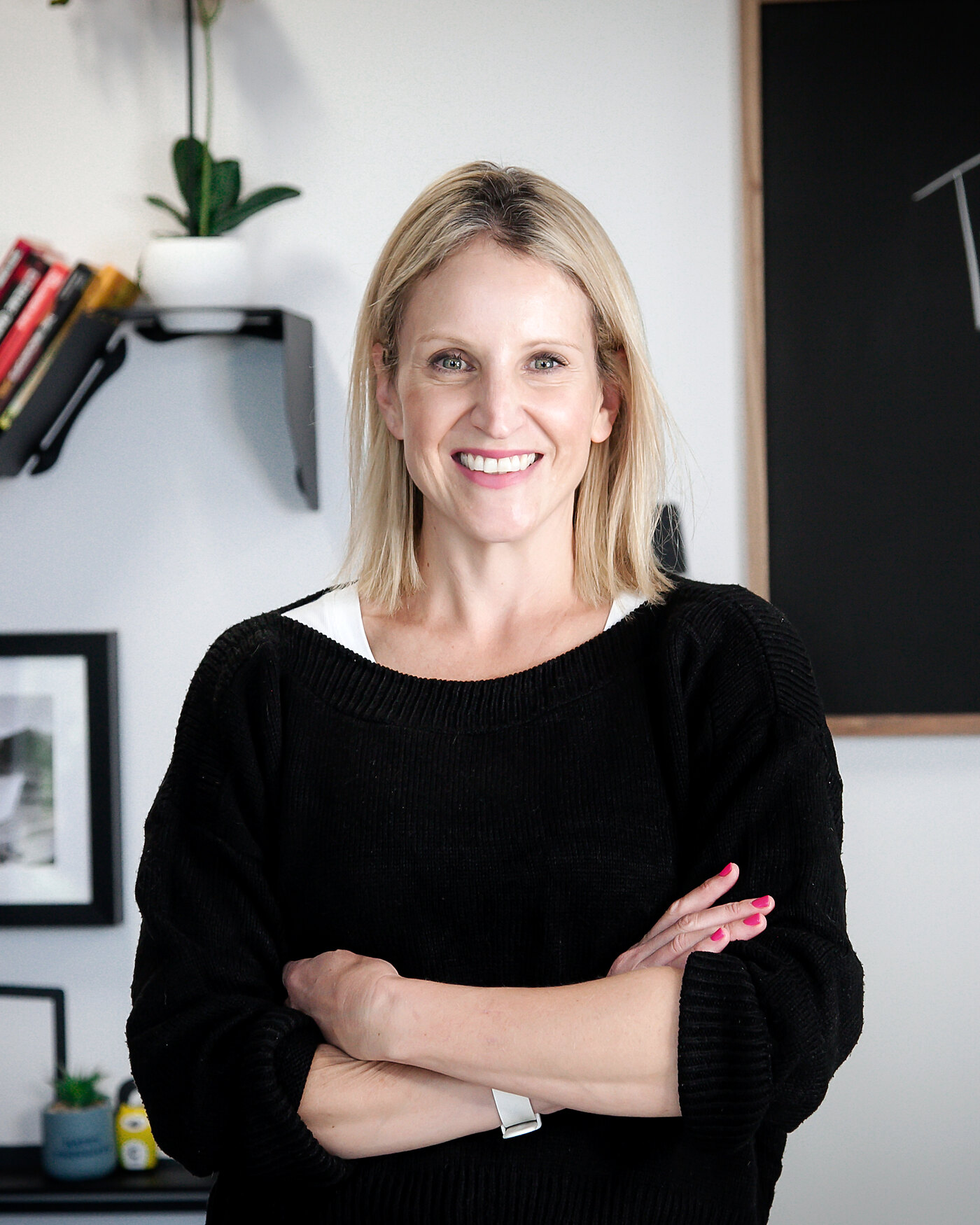
Fractional CPO & Organisational Development Partner

In plain terms: a senior HR partner who works alongside your team to build the people foundations that support real growth.

Senior people strategy — without the full-time hire.

I'm a builder, not just an advisor — I diagnose first, then design, build and embed the intervention that will actually move the needle, for founders, scaling teams, and established businesses alike.

Prefer email? Book a call above. For a quick question first, use the WhatsApp icon in the corner.
Curious what "build" actually looks like? See two examples →

Melissa Holder, Fractional CPO & Organisational Development Partner

Does this sound familiar?

Business problems don't usually arrive labelled "people problem." They show up like this:

1

You're growing quickly and your people infrastructure hasn't caught up.

2

Your leadership team isn't aligned on how to scale the organisation.

3

You're experiencing culture, accountability or performance challenges.

4

You need senior people leadership but aren't ready for a full-time CPO.

5

You're preparing for significant growth, transformation or organisational change.

6

You have an HR team but need senior strategic direction above them.

If any of this is true right now — that's exactly where I come in.

Who I work with

I diagnose first, then match the approach to your stage and context — from founder-led to established.

A good fit

  • Organisations that need senior people expertise without the overhead of a full-time hire — whatever size or stage you're at
  • Leadership teams working through a specific people, culture or performance challenge that needs the right diagnosis, not a generic playbook

Not my lane

  • Heavy employee relations casework or deep IR/compliance remediation
  • As a builder, I design and scope work myself wherever I can. Where a piece genuinely needs deep specialist input — like validated, local market pay data for a compensation framework — I bring in the right specialist for that one piece. I'm not a one-stop shop for every specialism, but I'll flag it in the plan, upfront

Where I add the most value

Organisational Development · Leadership Team Effectiveness · Team Dynamics & Trust · Culture & Values

I start by understanding your business plan, strategy and growth goals — only then do I design, customise or propose the interventions that will actually move the needle.

A small leadership team in a candid workshop discussion, working through a challenge together

Leadership alignment

Faster consensus, less friction at the top — translated into how the team actually behaves day to day.

Team trust

Built through diagnostics matched to your team, not a generic workshop — less politics, faster execution.

Culture & values

Design, diagnosis and evaluation of what's actually driving behaviour, not just what's on the wall.

Organisational design

Structures, operating models and accountability frameworks that scale with you.

HR maturity roadmapping

Root-cause diagnostics to identify what to build, in what order, for the highest-leverage impact as you grow.

How I think

High performance is built on what the numbers don't show: trust, clarity and a pace people can sustain. I work with you to find what's really holding your business back, and build the fix together.

Read my philosophy →

Breadth across the people function

I understand the business first, then set the people strategy and get the foundations right — before handing over to specialists for deep execution.

Talent acquisition
Learning & development
Management & leadership capability
Change management & business transformation
Retention & succession planning
Reward & compensation philosophy
Employee experience design
DEI programme design
Workforce planning & people analytics

Experience Eats Information for Breakfast

20+ years across financial services, cybersecurity and fintech — from early career in London, through 14 years scaling Mimecast to IPO and PE, to partnering Yoco's executive team today. One continuous thread, not one company.

20+
years leading people strategy — start-up to IPO to PE
No. 1
engagement scores globally, every year of the tenure
4
countries of hands-on HR leadership: UK, Australia, UAE, South Africa

Plus stakeholder exposure across the US, France, Italy and Spain — partnering VP-level leadership on BU objectives and expansion.

What this looks like for the business

Leadership alignmentLeadership teams working from the same standard, faster.
Strategic alignmentPeople strategy built off business strategy, not bolted on afterward.
Simplicity over complexityPractical, right-sized solutions — not academic frameworks.
Faster decision-makingLess second-guessing, more confident calls.
Trust & transparencyPeople trust that evaluation and reward are handled fairly and consistently.
Stronger people experienceEngagement and retention that hold up as you scale.
Productivity & performanceBetter people systems show up in the business numbers.
Less leadership firefightingTime back for the business, not the fires.
Management & leadership developmentLeaders who role-model the high-performance behaviours they expect from everyone else.
A high-performance cultureNot a slogan on the wall — a standard people are actually held to, every day.

Sustaining engagement through scale

The challenge

As Mimecast's South Africa office scaled from a regional office into a core part of global operations, growth put constant pressure on engagement and retention — the point where most fast-growing offices start to see attrition creep up.

What I did

Built a people function disciplined enough to hold engagement and retention steady through years of continued headcount growth, rather than treating culture as a one-off initiative.

The result

The highest employee engagement scores and the lowest voluntary attrition of any Mimecast region globally, for the full duration of leading South Africa — not a one-off result, an operating condition.

Repositioning South Africa globally

The challenge

Global leadership saw South Africa primarily as a cost-play location, which limited the seniority and scope of the roles based there.

What I did

Built and spearheaded the business case for Mimecast's Global Services Centre in South Africa, reframing the region's value from "cheaper" to "highly skilled."

The result

Shifted how global leadership saw the region. Open roles previously based in high-cost locations were subsequently redirected to South Africa.

Right-sizing international growth

The challenge

Mimecast needed a presence in the UAE and continued oversight of its Australian subsidiary, without over-building HR infrastructure in markets that didn't yet need it.

What I did

Right-sized the UAE expansion using an Employer of Record model instead of a full local entity, while overseeing the Australian subsidiary and operating as a genuinely global HR Business Partner to senior stakeholders, including VPs across the US and UK.

The result

An efficient, right-sized international footprint inside a Nasdaq-listed multinational — without the overhead of infrastructure the business didn't yet need.

How we work together

Start small, prove the fit, then decide how deep it goes.

START HERE

Diagnostic sprint

Leadership team, team effectiveness or HR maturity assessment (2–4 weeks). The low-risk way to start, with a clear path to fractional or retainer work if it's a fit.

Fractional / embedded

Ongoing part-time partnership with your leadership team, typically 1–2 days a month.

Advisory retainer

On-call strategic counsel for founders and execs, as things come up.

Frameworks & toolkit

Established, evidence-backed models — matched to your team and context, never applied off the shelf.

Swipe to see all 7

Enneagram (iEQ9)

How I use it — One-on-one, it gives leaders language for their own patterns under stress — what drives them, what derails them. In teams, it maps how different types clash or complement, so conflict gets diagnosed instead of personalised.

Who trusts it — Used by organisations from early-stage startups to Fortune 500 companies. Shopify CEO Tobi Lütke has spoken publicly about using it company-wide, including an internal tool showing colleagues' types to help teams work together more effectively.

DiSC

How I use it — A fast, practical read on how someone communicates, decides and handles pressure — used to build teams that understand each other's working styles, not just their job titles.

Who trusts it — Used by roughly 70–75% of Fortune 500 companies for team building, communication training and leadership development — one of the most widely adopted behavioural tools in corporate use.

Situational Leadership

How I use it — Teaches leaders to flex their style to the person and the moment — not everyone needs the same kind of leadership, and this gives a practical model for reading what's actually needed.

Who trusts it — Deployed in more than 70% of Fortune 500 companies, with over 15 million leaders trained worldwide since it was developed — the most widely adopted leadership model in corporate use.

The Ideal Team Player

How I use it — A simple lens — humble, hungry, smart — for what actually makes someone a good team fit. Used in hiring conversations, and in diagnosing why an existing team isn't gelling.

Who trusts it — From Patrick Lencioni, author of The Five Dysfunctions of a Team — one of the most widely taught team-effectiveness models in corporate leadership programmes globally.

The Gift of Feedback

How I use it — Reframes feedback as something given in service of the other person, not a judgement delivered at them — used to build the routine, low-drama feedback habits that most teams never establish.

Who trusts it — No public adoption figures to point to on this one — it's a foundational model in modern feedback and coaching practice, taught widely in leadership development programmes, rather than a single branded corporate product.

The High Performance Paradox

How I use it — Draws on Eduardo Briceño's distinction between the Performance Zone — executing, minimising mistakes — and the Learning Zone — experimenting, expecting mistakes. Used with leaders and teams stuck in constant execution mode, to build back in the deliberate practice that actually drives improvement.

Who trusts it — Comes from Eduardo Briceño's TED talk "How to Get Better at the Things You Care About" — one of the most-watched TED talks on learning — and his book The Performance Paradox, and is widely used in coaching, education and leadership development.

Ontological Coaching

How I use it — A coaching approach grounded in how a person's way of being shapes what they're capable of seeing and doing — used in 1:1 executive coaching where the block isn't a skills gap, it's a mindset one.

Who trusts it — A recognised methodology within professional coaching, underpinning much of modern executive and leadership coaching practice worldwide.

Accredited Development Coach — UCT Graduate School of Business· Master of International Business (MIB)· Bachelor of Journalism (Hons)

About me

Melissa Holder

I've spent 20+ years building people strategy from the ground up — as the founding HR leader for Mimecast in South Africa, standing up HR from scratch in the UAE, and overseeing the Australian subsidiary, inside a fast-scaling, Nasdaq-listed multinational. Today I partner Yoco's executive team as a Strategic People Business Partner.

Along the way I trained as an Enneagram Practitioner (iEQ9) and Accredited Development Coach through UCT's Graduate School of Business — because the best people strategy starts with genuinely understanding how people and teams work, not just what the org chart says.

Outside of work, I'm an active mom of two girls and a regular on the Cape Town trail running scene. I also care deeply about animal welfare and the community-based initiatives that make this city what it is.

Melissa Holder · Cape Town, South Africa